
IBBY-UNESCO Collection of Remarkable Books in Indigenous and Endangered Languages
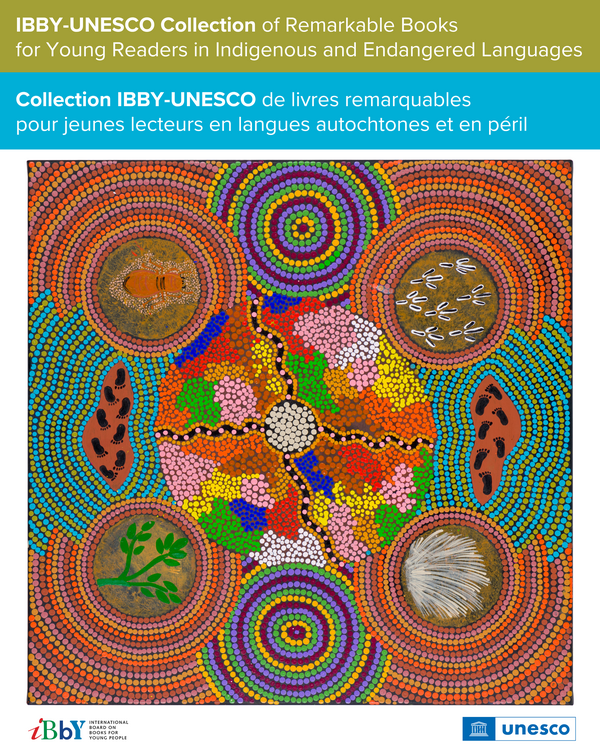
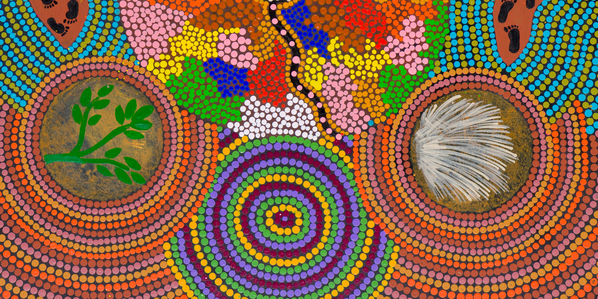
© Lucy Tanami
(inside illustration for Tamarra: A Story of Termites on Gurindji Country, Hardie Grant Explore, 2023)
About the Collection
IBBY and UNESCO join efforts to protect linguistic diversity in the field of children’s literature by launching a global call for submissions to put together the IBBY-UNESCO Collection of Remarkable Books for Young Readers in Indigenous and Endangered Languages.
It is known today that, due to a lack of speakers, 40 per cent of the approximately 7,000 languages around the world may disappear by the turn of this 21st century. In view of this threat, which is all the more critical to the 4,000 Indigenous languages in the world today, the United Nations General Assembly proclaimed the period between 2022 and 2032 as the International Decade of Indigenous Languages (Resolution A/RES/74/135) to draw global attention on the critical situation of many Indigenous languages and to mobilize stakeholders and resources for their preservation, revitalization and promotion. The United Nations Educational, Scientific and Cultural Organization (UNESCO) serves as lead UN Agency for the implementation of the International Decade.
The IBBY-UNESCO Collection is a worldwide invitation to publishers, librarians, and institutions—public and private—working for the promotion of books and reading, to discover and share books written for young readers in Indigenous and endangered languages.
An international committee, composed by IBBY and UNESCO, and influential international experts on children and young adult books who play a positive role in the empowerment of Indigenous identities and languages will select titles to form the Collection, which will be formally presented at the 40th IBBY World Congress in Ottawa (6–9 August 2026).
International Selection Committee
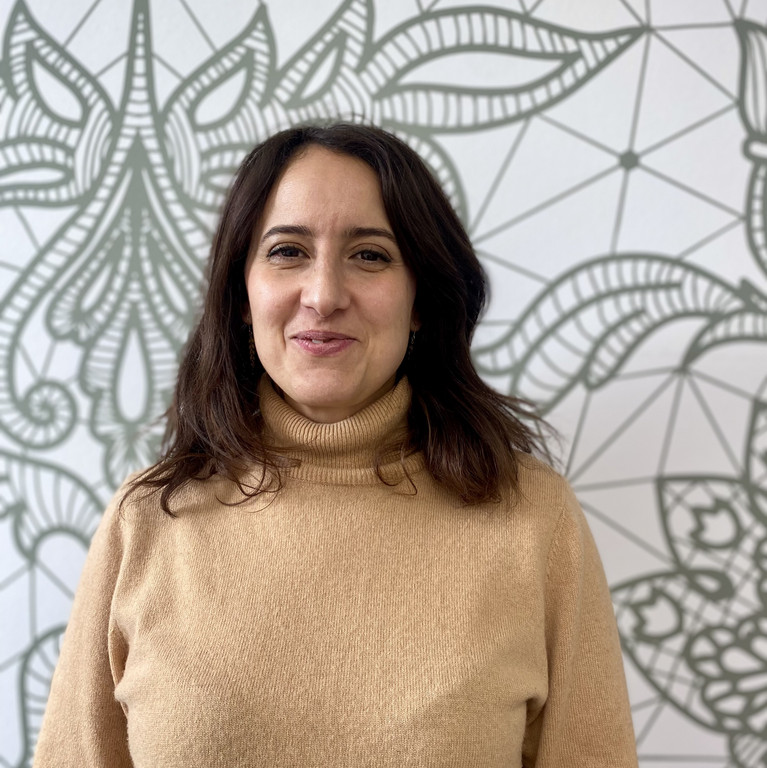
Aïcha Belkadi
Aïcha Belkadi is a linguist working at SOAS University of London (United Kingdom). Her main research interests and expertise are on Amazigh languages, which are spoken by various groups of indigenous people of North Africa. Her work focusses on the grammatical properties of these languages, how they compare to one another but also on the place of these languages in North African cultures, societies, history and politics. Aïcha is also very interested in the place of minority languages in health discourses and epistemic care, and, during the COVID-19 pandemic, was a researcher in a large UKRI-funded project investigating those issues amongst migrant communities in London.
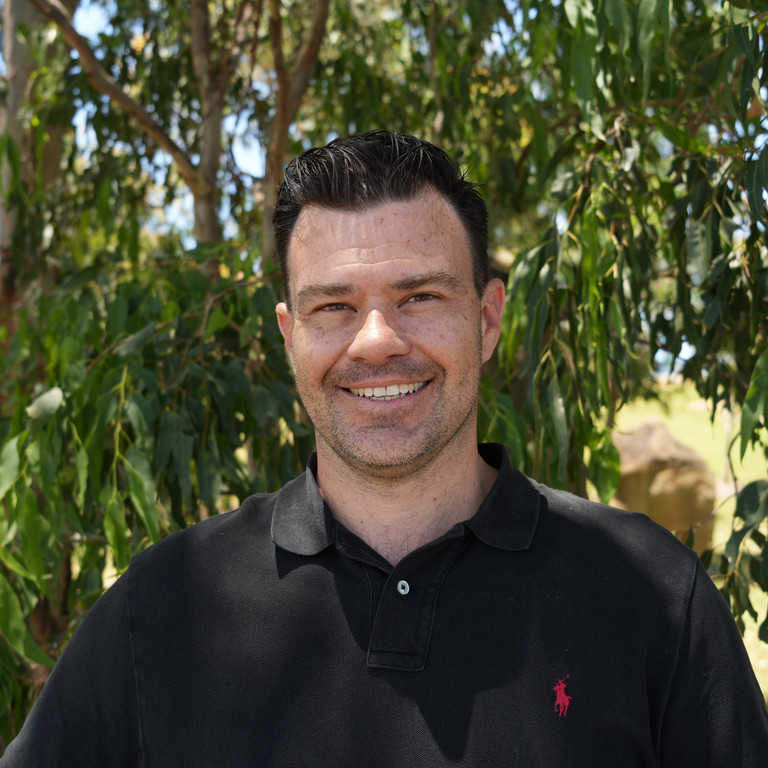
Ben Bowen
Wiradjuri man Ben Bowen is the CEO of the Indigenous Literacy Foundation (ILF). Ben is a proud Aboriginal man, a descendent of the Wiradjuri Nation with family links to the Gandangara, Dharrawal and Yuin Nations. He was born and raised on the Gadigal and Wangal lands of the Sydney basin. Ben has worked nationally and internationally, collaborating with both Indigenous Communities and government to create opportunities in education, health, and economic development. He has extensive experience in systems leadership and strategy. Since 2007, Ben has worked for and with First Nations people in the not-for-profit sector, building programs, developing strategy, sourcing funding, collaborating with partners, and shaping thought leadership within the university sector. As a former professional athlete, he understands the power of teamwork and believes in leading from within the team, nurturing a sense of circular responsibility and accountability, each person to the other. He believes that we are lifelong learners and is passionate about early childhood education and the power of literacy.

Simon de Jocas
Simon de Jocas is a seasoned educator and publisher with more than 35 years of experience in education and publishing. After a decade of teaching, he held leadership roles at Beauchemin, Duval, and Nelson before joining De Marque in 2009 to lead its Education division. In 2013, he acquired Les 400 coups, a publishing house known for its creativity, humour, and global outlook. In the fall of 2025, he transferred ownership of the company to an internal team, ensuring a smooth and values-driven transition. He now works as a publishing consultant, specializing in international development, strategic planning, and business growth. Founder of Publishers Without Border (PWB), Simon also serves on the International Publishers Association’s Freedom to Publish Committee (FtPC) and on the board of directors of Copibec. In September 2025, he was named an Honorary Member of the Association nationale des éditeurs de livres (ANEL) for his outstanding contribution to the publishing community. A humanist and connector, Simon believes that there is a book for every reader.
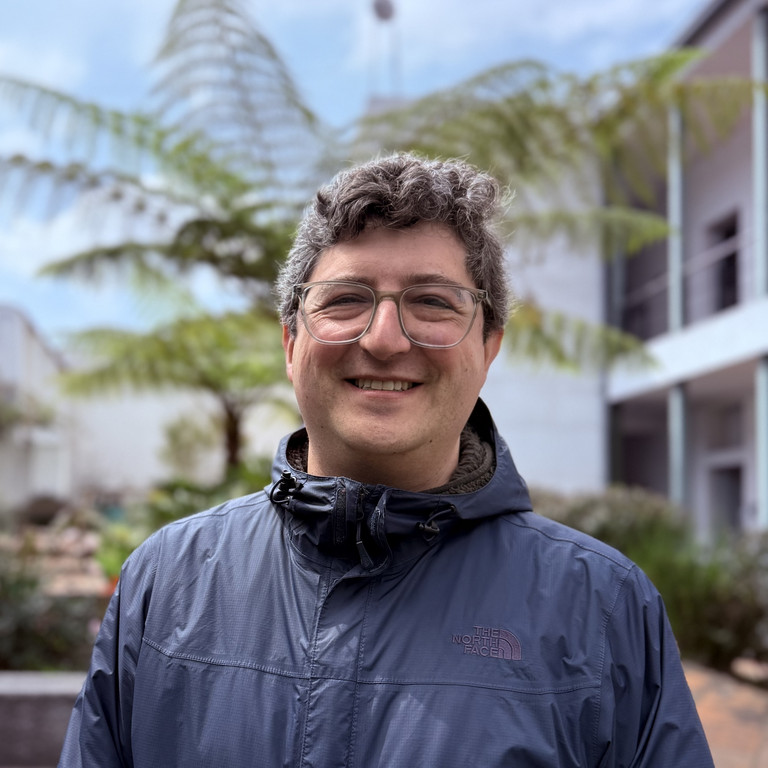
Juan Manuel Espinosa
Juan Manuel Espinosa serves as the Academic Deputy Director of the Instituto Caro y Cuervo in Colombia. With a background in literary studies and critical theory, his work bridges the gap between historical philology and contemporary language policy. At the Institute, he leads initiatives that transform rigorous linguistic research into accessible educational resources, prioritizing the revitalization of Colombia’s 65 native languages.
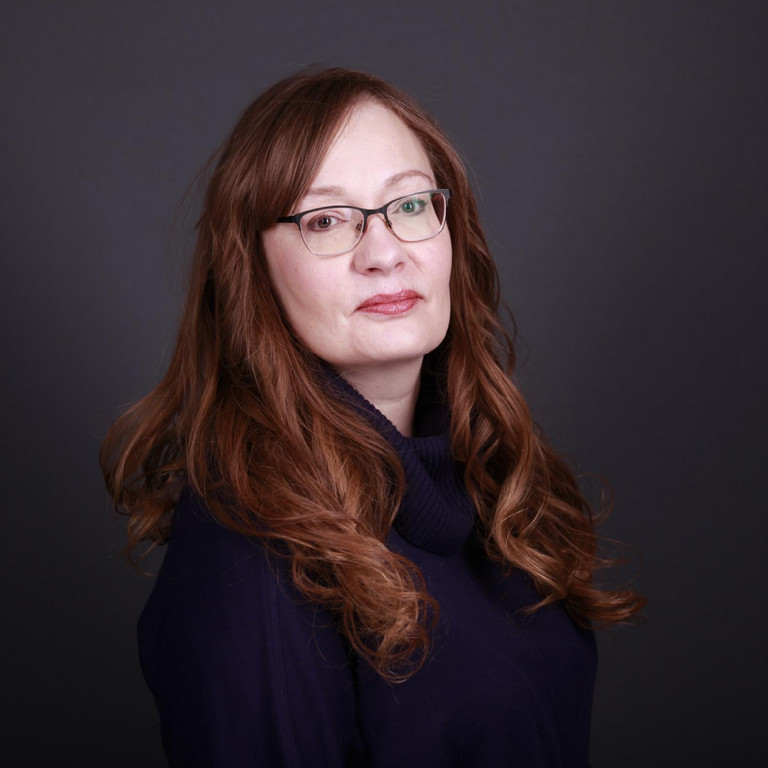
Colette Poitras
With many Michif ancestors who were polylingual, Colette Poitras is a proud citizen of the Métis Nation of Alberta, with historic and contemporary kinship connections throughout the Métis homeland. She is a proud mother of two wonderful daughters and a beautiful baby grand daughter. She is the Vice-President of IBBY Canada, the Chair of the From Sea to Sea to Sea: Celebrating Indigenous Picture Book Catalogue committee, and the Indigenous Public Library Advisor within the Government of Alberta. She has worked in the public library sphere for over 25 years. Colette received a Library Journal Movers and Shakers award in 2017 and a Queen’s Platinum Jubilee Medal in 2022 for her leadership in advancing library services for Indigenous communities. She holds a Bachelor of Arts and a Masters in Library and Information Science, and has served in a variety of national and international roles within Indigenous, library, and literary communities.
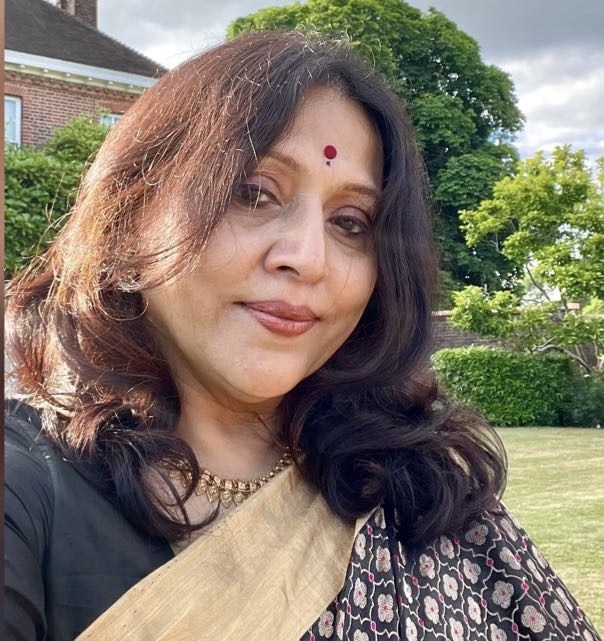
Swati Raje
Swati Raje is a unique blend of academia and activism with a Bachelors in Communication and Journalism, M.A. in Literature, and M.Phil. in Children’s Literature. The first full time woman reporter in a prominent Marathi newspaper, she was the Chief Editor of the Sunday Edition and feature desk. A best-selling award-winning writer, Swati Raje has won accolades from the government as well as private organisations for her work in children’s literature and her short stories for adults and children. She has also written for television, documentaries, and radio programmes. Writing for children is her passion and she has multiple award-winning picture books to her credit. These books are being widely read in schools, made into plays, short films and a national level puppet show. An active member of the International Board on Books for Young people (IBBY), she is the Founder President of Bhaashaa Foundation: an NGO focused on developing innovative, sustainable models and systems for language preservation in India for the past two decades. It has been a pioneering effort in creating a love for languages in adults and children across the country.
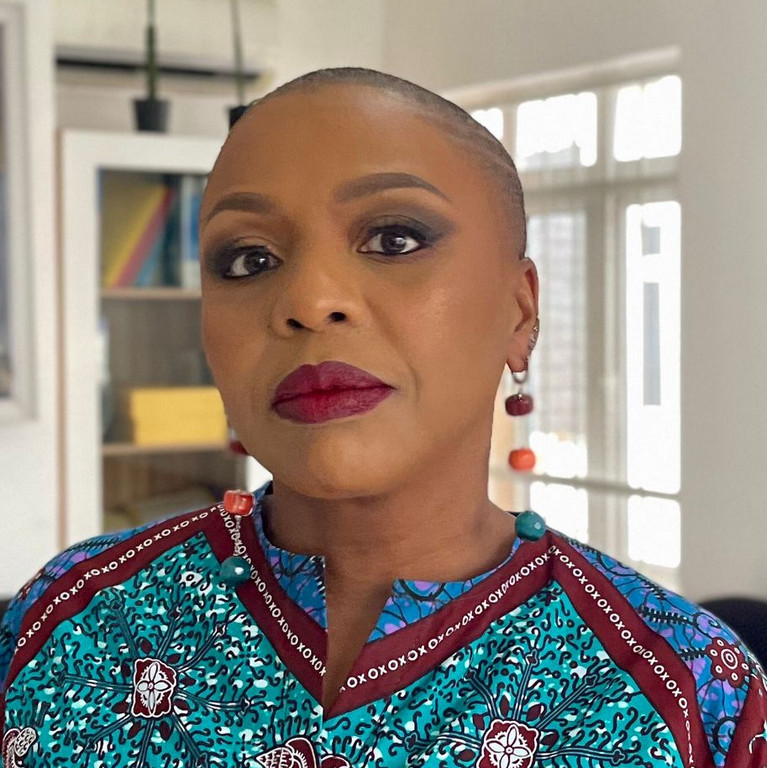
Lola Shoneyin
Lola Shoneyin is a writer, publisher, bookseller, festival organiser and cultural activist. Her works include three collections of poems, an award-winning novel The Secret Lives of Baba Segi’s Wives and ten children’s books. Shoneyin is the founder of Book Buzz Foundation—an NGO that is devoted to promoting literacy, creating reading spaces, and organising cultural events such as the Ake Arts & Book Festival. In 2016, Shoneyin recently founded Ouida Books, a publishing house that publishes contemporary African voices. She also runs a cultural space called OUIDA which boasts a bookstore, performance spaces and an audio recording studio. Shoneyin lives in Lagos where she is working on her second novel and a series of children’s picture books set in northern Nigeria.
Jeannet Stephen
Jeannet is an Indigenous scholar of Kadazan ethnicity from Papar, Sabah, Malaysia. She currently serves as Deputy Director of the Borneo Institute for Indigenous Studies (BorIIS) at Universiti Malaysia Sabah (UMS), where she also leads the Cluster for Languages & Linguistics. With academic training in TESL (UKM), Applied Linguistics & Bilingualism (University of Newcastle-upon-Tyne, UK), and a PhD in Language Teaching and Learning (University of Auckland, NZ), her work spans language revitalisation, Indigenous education, and cultural sustainability. Currently she heads the Indigenous Early Childhood Education Project funded by UNICEF Malaysia and the Sabah Ethnic Language Curriculum pilot, anchoring both in community-driven, multilingual models. She works closely with grassroots NGOs, heritage language teachers, and policymakers, and serves as a consultant to the Sabah Cultural Board Cultural Mapping Project. She also leads the Sabah Native Customary Schools Living Lab. Internationally, she is one of the Indigenous representatives for Asia on the UNESCO International Decade of Indigenous Languages (IDIL) Global Task Force.
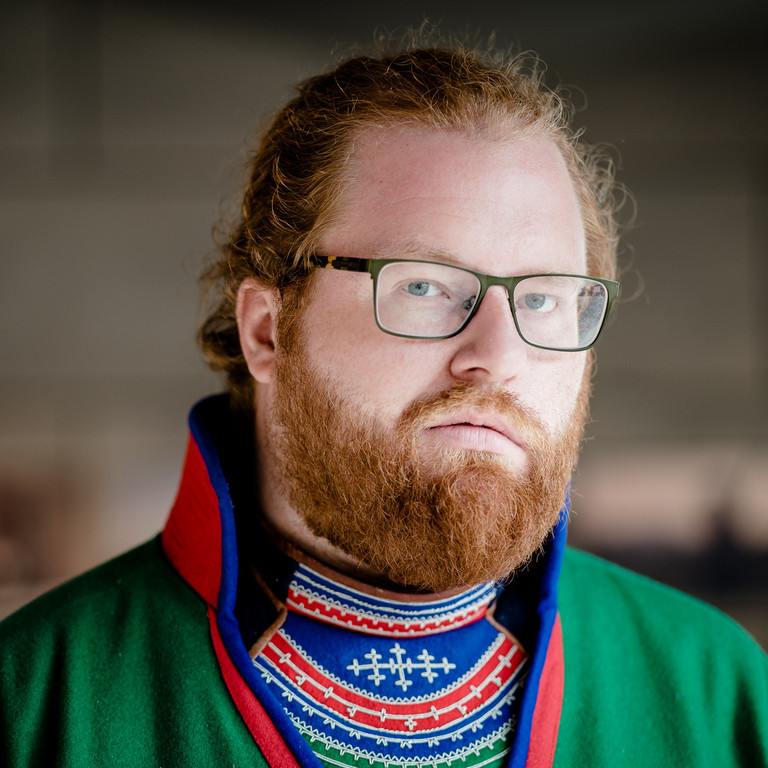
Johan Sandberg McGuinne
Johan Sandberg McGuinne is a South Saami and Scottish Gaelic poet, traditional singer, translator, and teacher whose work bridges education and literature, with a particular focus on children’s and young adult writing. Holding an MLitt in Modern Scottish Writing from the University of Stirling and an MFA in Literary Translation to and from Saami languages from the University of Gothenburg, Johan combines academic expertise with a deep commitment to language revitalisation and decolonial practices.
As a certified teacher of South Saami, English, and German, Johan brings his passion for language and storytelling into the classroom, believing that education is a cornerstone of cultural resilience. Since 2014, he has written and translated numerous children’s books, essays, and poetry collections across English, South Saami, and Swedish. He has also edited or co-edited anthologies such as Bágos Báhkuj / Ordagrant (2022) and Unga Samer Skriver (2018), amplifying young voices in Saami communities.
His more recent translation work includes Uiesh / Någonstans (2025), bringing the poetry of Canadian Innu writer Joséphine Bacon into Swedish and South Saami. Johan currently serves as Chair of Bágo, the Saami Writers’ and Translators’ Union, and previously led Tjállegoahte – The Saami Writers’ Centre in Jokkmokk. Through teaching, writing, and leadership, he works to strengthen Indigenous languages and create spaces where cultural knowledge thrives.

Eugenia Urrere
Eugenia Urrere is dedicated to strengthening Indigenous languages in the digital age and restoring their rightful social status and presence alongside all other languages of the world. Since 2018, she has worked closely with communities across Latin America to support the revitalization, visibility, and transmission of their linguistic heritage. Her work began in the non-profit sector, contributing to initiatives focused on cultural preservation and equitable access to information. In 2021, she founded Indigenius, a language service provider that promotes fair employment opportunities for Indigenous linguists and encourages the integration of underrepresented languages into modern technological ecosystems. Through this work, she fosters close collaboration between communities, organizations, and technology partners, ensuring that Indigenous knowledge is represented with accuracy, respect, and cultural integrity. Eugenia's approach brings together cultural studies, technology, and community engagement to address persistent gaps in linguistic diversity. She advocates for ethical and sustainable localization practices that honor each language's identity while expanding its digital presence. Her mission is to help creating spaces where Indigenous voices can thrive, contribute, and represent a sense of pride for their communities. She works every day to ensure that linguistic diversity becomes a meaningful part of the future, innovation, and social transformation.
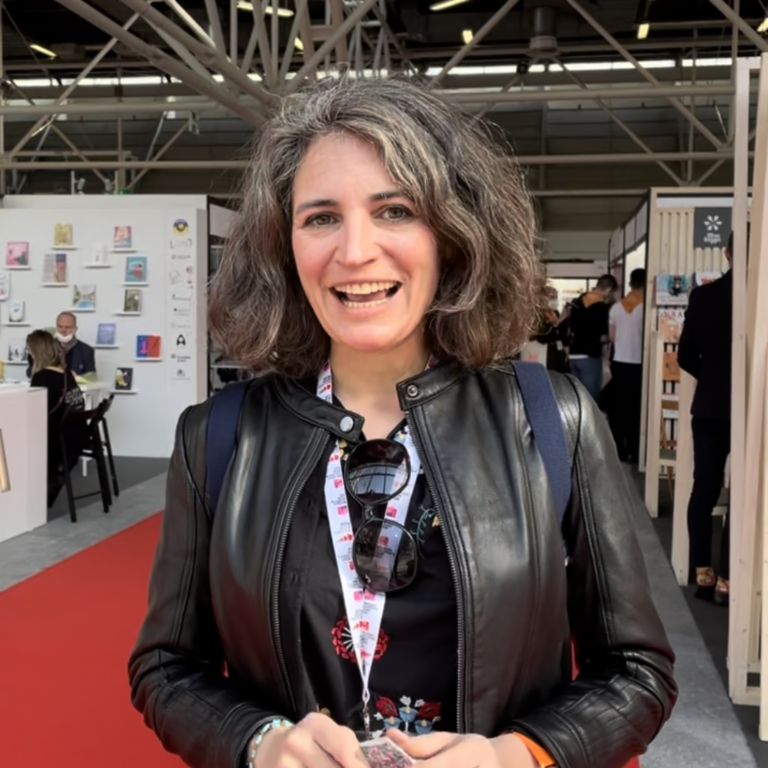
Carolina Ballester
Carolina Ballester was born in Paris and studied in Spain and France, obtaining an MA in Political Science from the Madrid Complutense University and degrees in Chinese and Arabic from the French National Institute of Oriental Studies (INALCO). She worked as a translator and as cultural attaché at the Consulate of Spain in Shanghai. For ten years, she was in charge of international programmes for the Shanghai International Children’s Book Fair, where she promoted and developed international interest in international children’s books in general, and picture books in particular. She served on juries for children’s illustration catalogues and contests. Carolina joined IBBY as Executive Director in 2022 and brought international experience and fluency in several languages. She is an ex-officio Member of the Executive Committee.
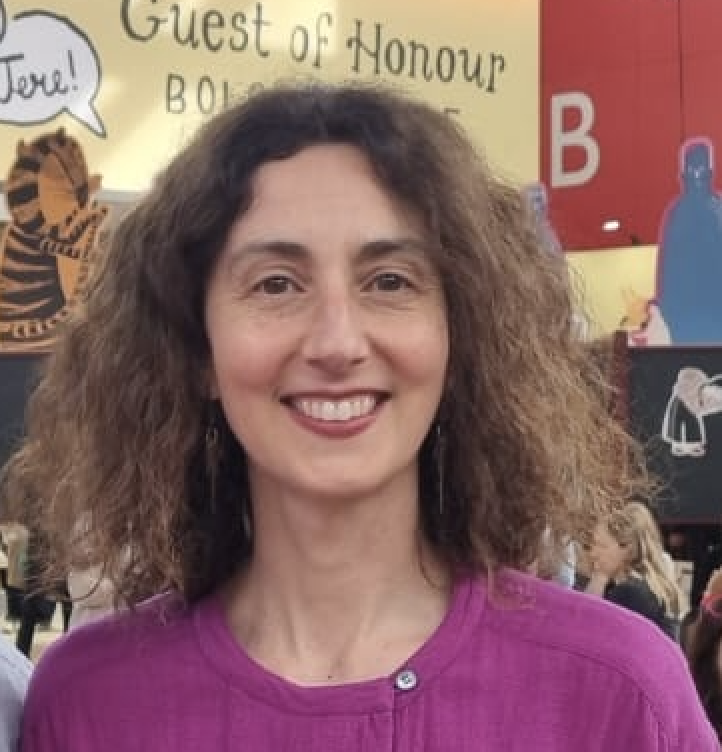
Cristina Puerta
Cristina Puerta is a book editor, rights manager and children's literature specialist with more than twenty-five years of international experience in commercial and institutional publishing. She has worked as a publisher for children’s books, literary fiction, non-fiction and illustrated books in Latin America and Europe. As Head of UNESCO Publications, she creates and manages publication projects in several languages, negotiates co-editions and foreign rights, and scouts for international co-publishers to develop multilingual publications for both specialized audiences and the public at large, with a particular focus on young readers.

Regulations and Criteria
WHAT WE ARE LOOKING FOR:
- Books for children and young people (picture books, novels, biographies, graphic novels and nonfiction) presenting high-quality standards in terms of text and/or illustration;
- books published between January 2018 and December 2025;
- books originally published in an Indigenous and/or an endangered language, and original bilingual books including at least one Indigenous and/or endangered language;
- books expressing the intention of, or relation to, one or more of the 10 outputs of the Global Action Plan of the International Decade of Indigenous Languages; and
- books and publications that adhere to UNESCO principles and respect political neutrality.
CRITERIA ON ENDANGERED LANGUAGES:
The Collection is based on the following methodology:
- Out of use (0) includes languages that have presumably gone out of use after 1950;
- Critically endangered (1) spoken/used by < 25,000;
- Severely endangered (2) includes between 10,000 to 100,000 users left.
- Definitely endangered (3) has between 100,000 and 3.5 million.
- Potentially vulnerable (4) has between 3.5 million to 7 million.
- Endangered/Unsafe (5) ranges from small numbers to 7.5 million.
- Safe (6) is considered as implying non-endangerment as a consequence of high status and high presence. This last category will not be included for the purposes of the IBBY-UNESCO Remarkable Books for Young Readers in Indigenous and Endangered Languages.
WHAT ARE THE 10 OUTPUTS OF THE GLOBAL ACTION PLAN OF THE INTERNATIONAL DECADE OF INDIGENOUS LANGUAGES:
- Inclusive, equitable, intercultural, quality education and lifelong learning environments and opportunities in Indigenous languages provided in formal, non-formal and informal educational settings.
- Enhanced capacities among Indigenous Peoples for applying their languages and knowledge to the eradication of hunger and maintaining the integrity of Indigenous food systems.
- Favorable conditions established for digital empowerment, freedom of expression, media development, access to information and language technology, alongside artistic creation in Indigenous languages.
- Appropriate Indigenous language frameworks designed to offer better health provision, recognizing traditional systems of medicine, as well as promoting social cohesion and delivering humanitarian responses, especially during health crises, times of conflicts and natural disasters.
- Access to justice and availability of public services guaranteed to Indigenous language speakers and signers.
- Indigenous languages are sustained, as a vehicle of living heritage and biodiversity, whilst participation in – and access to – all forms of culture are enhanced for Indigenous Peoples.
- Enabling environment is created for Indigenous languages, thereby contributing to biodiversity conservation, climate change adaptation and mitigation, ecosystems management, land restoration, improving the marine and coastal environment, reducing natural hazards, preventing pollution, and managing water resources.
- Economic growth is strengthened by enhanced decent job opportunities for Indigenous Peoples and languages users.
- Gender equality and women’s empowerment are achieved through the preservation, revitalization and promotion of Indigenous languages; and
- Public and private partnerships are firmly established to place on the global agenda a long-term commitment to the preservation, revitalization and promotion of Indigenous languages.
Submission Process
LAUNCH OF THE COLLECTION:
The IBBY-UNESCO Collection of Remarkable Books for Young Readers in Indigenous and Endangered Languages will be formally presented at the IBBY 40th World Congress in Ottawa (Canada) on 6–9 August 2026 with an accompanying catalogue. The collection will be further displayed at international book fairs (Frankfurt 2026, Bologna 2027), and three touring sets will be available for IBBY local branches, UNESCO National Commissions and IBBY-UNESCO partners interested in promoting quality reading material for young readers. The permanent IBBY-UNESCO Collection will be hosted at the UNESCO Library at its Headquarters in Paris (France).
➜ Download the Regulations (PDF, 137 Kb)
© Lucy Tanami
(inside illustration for Tamarra: A Story of Termites on Gurindji Country, Hardie Grant Explore, 2023)